Mount Vesuvius and Pompeii
What happened in 79 AD
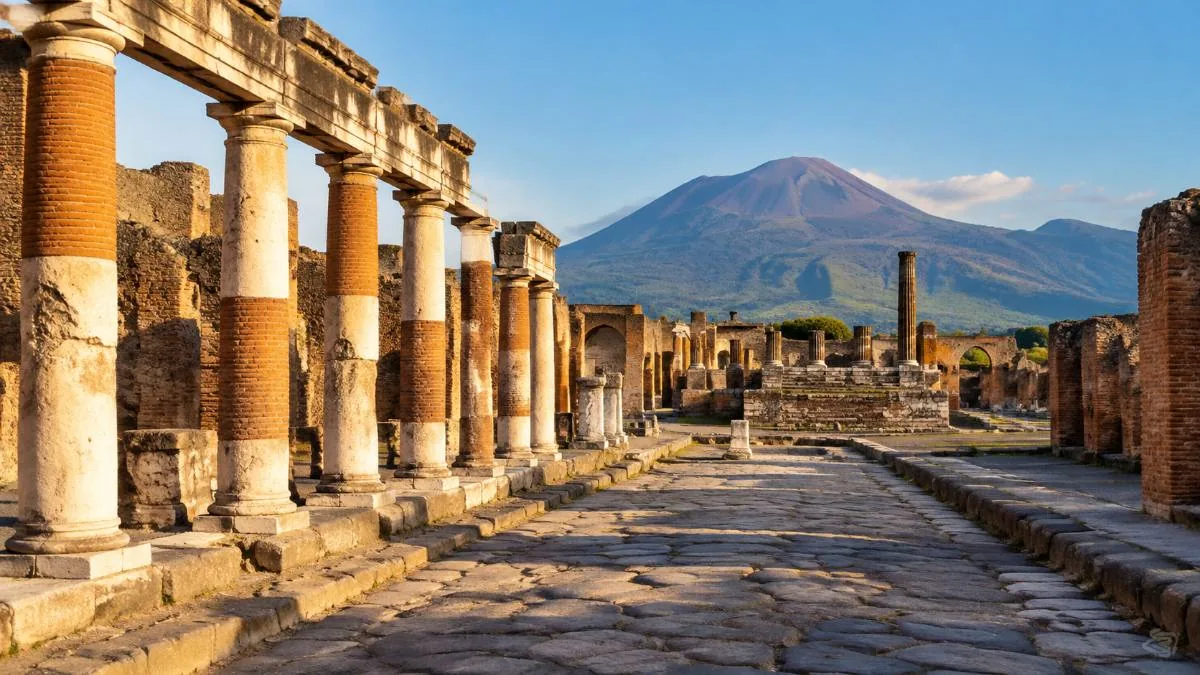
The 79 AD eruption buried four settlements: Pompeii, Herculaneum, Oplontis and Stabiae. What surprises almost everyone is how. Pompeii was not swallowed by a river of lava: it was buried by lapilli and ash, material that fell from above and filled the city until it covered it. That’s why today you walk through entire streets instead of looking at a field of black rock.
They are two very different sights, and they change how you view both places. From the crater’s edge, you can see overlapping layers on the walls: each one is a phase, and one of those events is what buried Pompei underground for centuries. What you actually see from up there is explained in what you can see from the crater.
Two sites, two tickets, two trips
Vesuvius is a national park with a trail and time-slot entry. Pompeii is an archaeological site with its own ticket. There is no single ticket covering both: when a tour says “admissions included,” it is buying two tickets for you. How the crater ticket works is explained in the tickets for Vesuvius.
The fatigue is different in a way no one tells you beforehand. Mount Vesuvius is half an hour uphill on loose gravel, with wind and no shade: short, concentrated effort. Pompeii is a few kilometres on uneven paving stones, under the sun, for hours: long, drawn-out effort. Doing both in the same day means combining two things that don’t balance each other out.
Doing them in one day: it’s possible, but know what you’ll miss
It is a legitimate choice, and it is the best-selling one in the area. The classic day trip from Naples lasts seven hours or seven and a half, with pick-up from your hotel, the cruise port or Napoli Centrale, entry to both sites, a guide or audio guide and lunch. Diane, from the UK, describes it as a beautiful day from start to finish; Cornelia remembers the view over the city from up there; Noémie appreciates that the coach passed very close to her accommodation. None of them is exaggerating.
What still needs to be said: time pays the price at the crater. On a day visiting two sites, the stop at Vesuvius is shortened, and with half an hour of climbing included, the time at the edge becomes limited. There is also a round-trip option that leaves about 100 minutes for Vesuvius and about two and a half hours for Pompeii independently, with an audio guide for the ruins: this is the choice for those who dislike guided groups. The full comparison is in Pompeii and Vesuvius in one day.
Also note that the combined day trip is not suitable for those with mobility issues: the operator states this, and with two sites in a row, it’s a serious consideration. See is it safe to climb.
Doing them in two days: the alternative
If you have the time, splitting them is much better. Pompeii needs a full morning to avoid feeling rushed; Vesuvius fits comfortably into a half-day, letting you pick the best time for light and temperature. We’ve written about how to fit the days together. how many days are needed in Naples.
The order, if you’re wondering: first the ruins, then the mountain. Climbing the crater after walking through a street in Pompeii gives the ascent a meaning that would otherwise be lost. David, from France, puts it in his own way: the climb is worth it both for the view and to understand the tragedy of 79 AD.
If you choose the combined day trip, check how much time is allocated on Vesuvius before looking at anything else. That’s the only number that distinguishes a proper climb from a quick photo stop.
Two sites in one day
The day trip from Naples includes transport, entry to both sites, and lunch: it’s the most reviewed option in the area, and it’s worth choosing knowing that time at the crater is limited.
Frequently asked questions
Was it Mount Vesuvius that destroyed Pompeii?
Yes, with the eruption of 79 AD, which also buried Herculaneum, Oplontis and Stabiae. Pompeii ended up under lapilli and ash, not under a lava flow.
Does the Vesuvius ticket include Pompeii?
No. They are two separate sites with two separate tickets; tours that include both purchase two. See tickets for the crater.
Can you visit Pompeii and Mount Vesuvius in the same day?
Yes, and it’s the most sold option: about seven hours. The trade-off is the time at the crater, which is shortened. The options are in Pompeii and Vesuvius in one day.
Pompeii first or Vesuvius first?
First the ruins, then the mountain: climbing after seeing Pompei gives meaning to the ascent. If you have time, split them over two days: how many days are needed.
How much walking is there in total?
At Vesuvius, roughly 4 km between ascent, rim, and descent; at Pompei, much more, on uneven paving. See how long the climb takes.